

Research Focus
Optimization of the Electrical System Architecture of Motor Vehicles in Early Design Phases
In today's motor vehicles, the wiring harness is one of the most important, and at the same time most expensive, components. It connects all electrical components to their corresponding control and computing units, thereby ensuring the reliable flow of data and power throughout the whole vehicle. As the number of convenience and safety features increases, so do the complexity and weight of the wiring harness. Therefore, ways are being sought to optimize these properties already during the design process.
Conventional domain architectures use one or more electronic control units (ECU) for each function. The goal of the novel zonal architecture is to divide the vehicle into zones, whereby all ECUs are replaced by a single central zonal control unit (ZCU) per zone. The aim is to reduce complexity and minimize cabling. In zonal architectures in particular, the number of zones is a key factor, determining the structure, complexity, and cost of the vehicle electrical system. A comparison of different architectural variants should therefore be conducted as early as possible in the design process in order to determine, among other things, the ideal number of zones. To this end, the additional design step of architectural evaluation or architectural optimization is introduced, which is incorporated into the existing design process as shown in the following overview.
Architecture evaluation and optimization
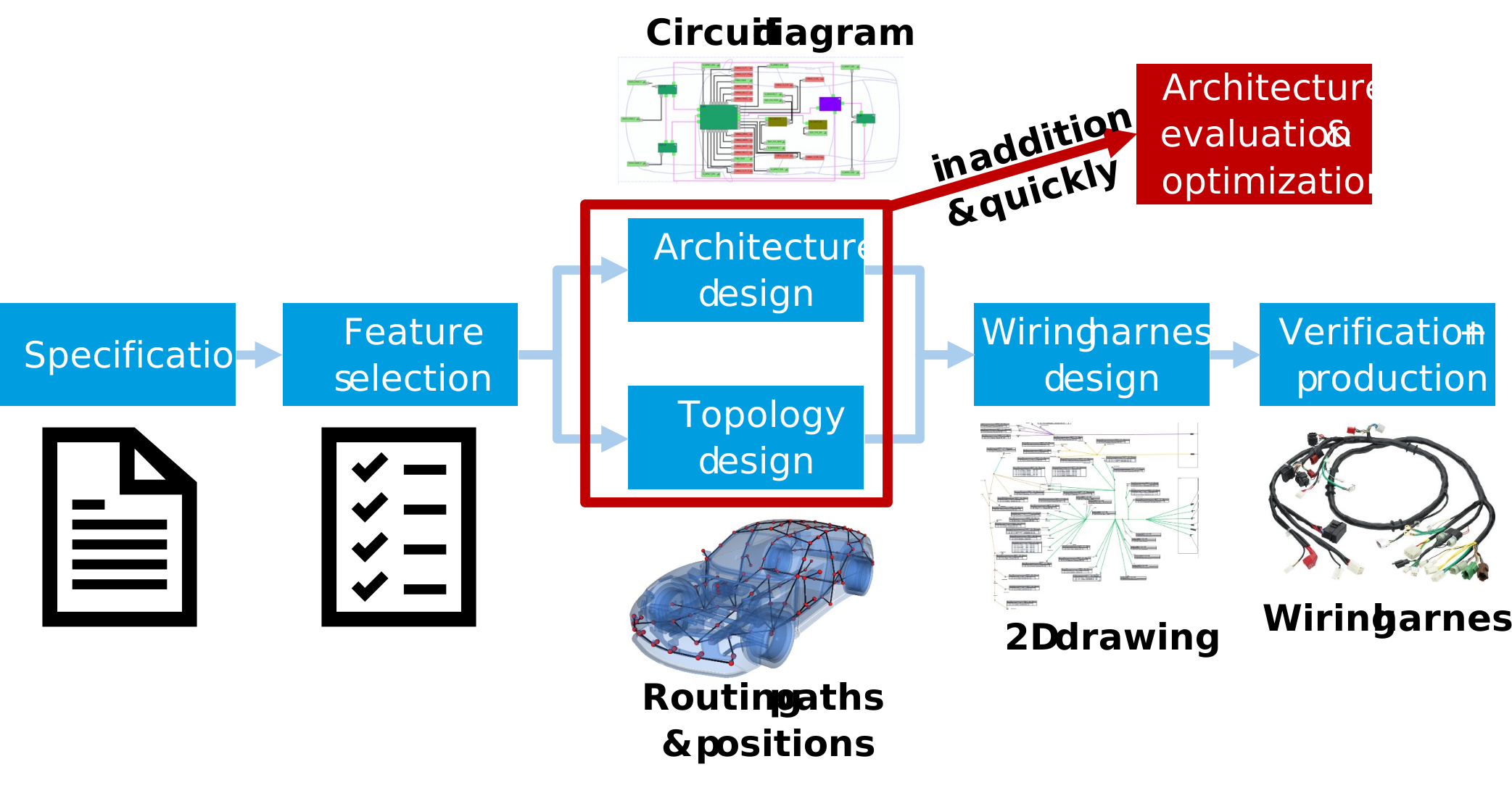
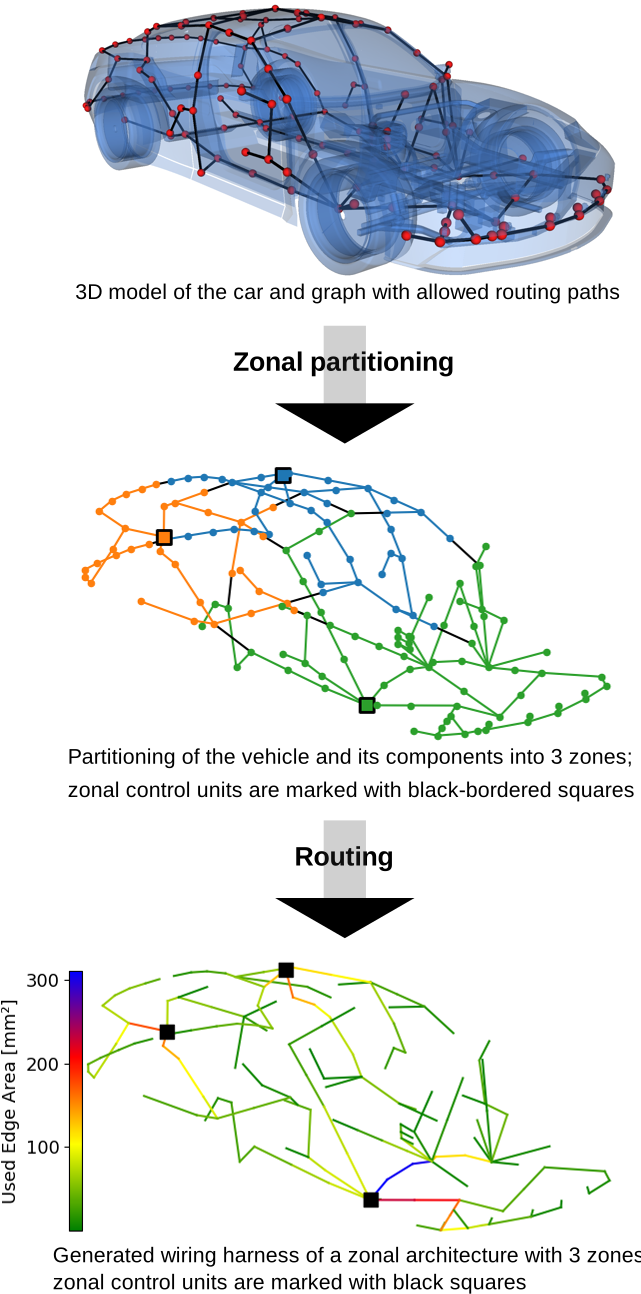
The goal of the architecture evaluation is the rapid and automated generation of architecture variants and their wiring harnesses, particularly for zonal architectures. This is implemented as a multi-step process, as illustrated in the figure below. The process begins with the vehicle's 3D data, in which the possible points for component positioning and the possible paths for wire routing are modeled as a graph. Together with the components intended for the architecture, this data is subjected to zonal partitioning. The result is, on the one hand, the division of the vehicle into the specified number of zones and, on the other hand, the positioning of the zonal control units within the zones. This is followed by routing, in which each connection to be wired within the vehicle electrical system is assigned a specific path within the vehicle, taking into account the available installation space. The result is a wiring harness that can be evaluated based on various calculated metrics. These include total wire length, mean wire length, maximum wire length, and total wire weight, as well as the costs of the cables and zonal control units.
Aranea as a Tool for Architecture Evaluation
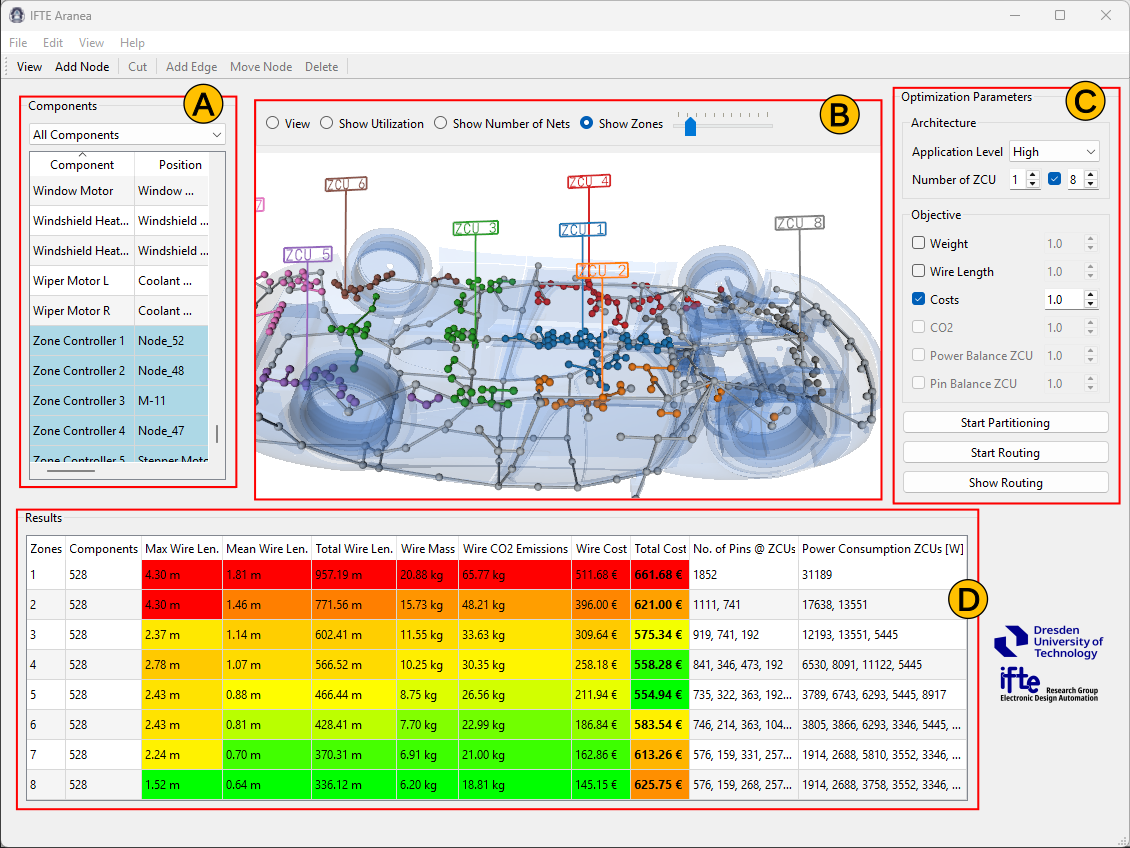
The institute is developing the software Aranea, which enables automated architectural evaluation. The input data consists of 3D data or a graph of possible routing paths, as well as a list of the components to be placed in the vehicle. The data can be imported in formats such as the industry-standard KBL format or as a feature list from the open-source OpenBoardNet vehicle model. The results include various architectural options, including the division into zones, the resulting wiring harness, and relevant key metrics to facilitate comparisons.
Once the input data has been loaded into Aranea, the parameters for the architecture evaluation can be defined. These include the number of zones (or a range of zone numbers to be iterated over) and various optimization parameters that can be used, for example, to prioritize shorter wires or a more cost-effective architecture. Aranea then automatically performs zonal partitioning and routing for each requested architectural variant (see previous image), and the key metrics for the generated variants are compared in a table. Color highlighting makes it easy to quickly identify suitable variants. Selecting a variant in the table displays the generated zonal architecture and wiring harness for that variant.
Results
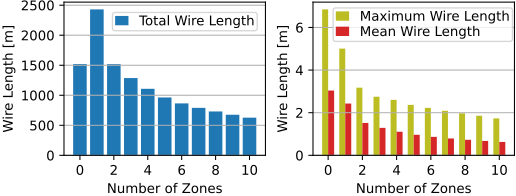
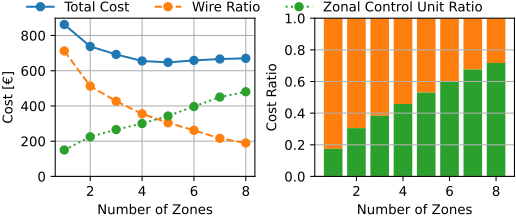
Using Aranea, it was demonstrated that the use of zonal architectures significantly changes the wiring harness. The total wire length decreases as the number of zones increases, and with 10 zones, it is already 42% of the wire length of a comparable domain architecture. The maximum and mean wire lengths also decrease as the number of zones increases, reaching 21% (maximum length) and 27% (average length) of the domain architecture with 10 zones. The shorter total wire length primarily reduces costs and manufacturing effort, while the shorter maximum wire length enables greater automation in wiring harness production. As the number of zones increases, the cost of wiring decreases accordingly, but the cost of zonal control units rises. Depending on the application, a balance must therefore be struck between these two factors and other relevant variables, which can be achieved quickly by using Aranea.
Funding
The results presented on this page were produced as part of the MANNHEIM-KI4BoardNet project, funded by the German Federal Ministry of Research, Technology and Space.
Publications
- P. Näke, F. Stein, A. Krinke, J. Lienig "Efficient Architecture Evaluation and Generation of Automotive Wiring Harnesses," in Proc. of the IEEE Transportation Electrification Conf. and Expo, Asia-Pacific (ITEC Asia-Pacific), Singapore, pp. 1-5, November 2025 [pdf, DOI].
- P. Näke: "Aranea – Optimale Verdrahtung zum Architekturvergleich von Kfz-Bordnetzen", Presentation, Meeting of the "Circuit Layout Design" Technical Group: Automotive EDA, Erfurt, Germany, September 22nd, 2025 [pdf].